 Company
Building a Canadian robotics company, intentionally
Vive Tennis is, by design, a Canadian company. We're incorporated in Ontario. Our lab is on Yonge Street in Toronto. Our first 100 customers were Canadian. We're working through the federal Start-Up Visa Program to formalize the founding team's status here. None of this is incidental.
The reasons:
1. Talent
The Toronto–Waterloo corridor is one of the densest concentrations of machine-learning and robotics talent on the planet. We can hire from U of T, Waterloo, McGill and the spillover from the Vector Institute and OpenAI's Toronto office without offering U.S. compensation. That math wins for an early-stage hardware company.
2. The Start-Up Visa Program
For an immigrant-founded team — which ours is — the federal Start-Up Visa Program is one of the most founder-friendly immigration paths in the world. It explicitly recognizes that companies are built by people, that people need to live where they build, and that hardware-and-IP companies are exactly the kind of innovation Canada wants to retain.
We work with a designated organization participating in the program. The data room is open to designated incubators, angel groups and venture funds at any time — info@vivetennis.ca.
3. The customer mix
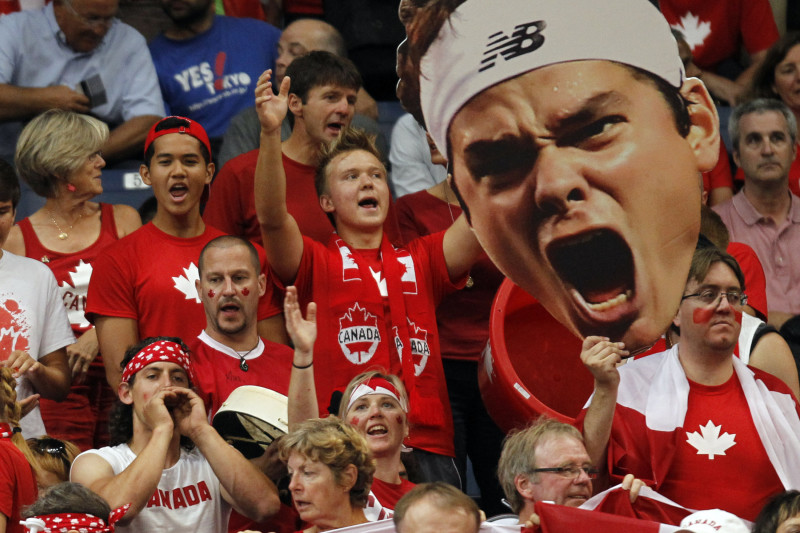
Tennis Canada has been a quietly fantastic ecosystem partner. Canadian players have been our most engaged early customers and most generous early reviewers. The country punches above its weight in tennis right now — Auger-Aliassime, Fernandez, Andreescu — and the recreational base is growing faster than the U.S. on a per-capita basis.
4. Manufacturing without giving up R&D
Manufacturing at volume happens overseas; R&D, design, and final assembly happen in Toronto. That split keeps the IP, the firmware engineers, and the product decisions where they should be. It also means a customer in Calgary, ordering a Canadian-designed product, doesn't pay U.S. import duties.
Why "intentionally"
The default for hardware companies is to incorporate in Delaware, raise from California, and treat Canada as the place the founders happen to live. We chose not to. The next ten years of personal-sport robotics will be a meaningful industry. We'd rather build it here, with Canadian talent, Canadian IP, and Canadian customers as our beachhead — and export to the world from there.
— Behzad